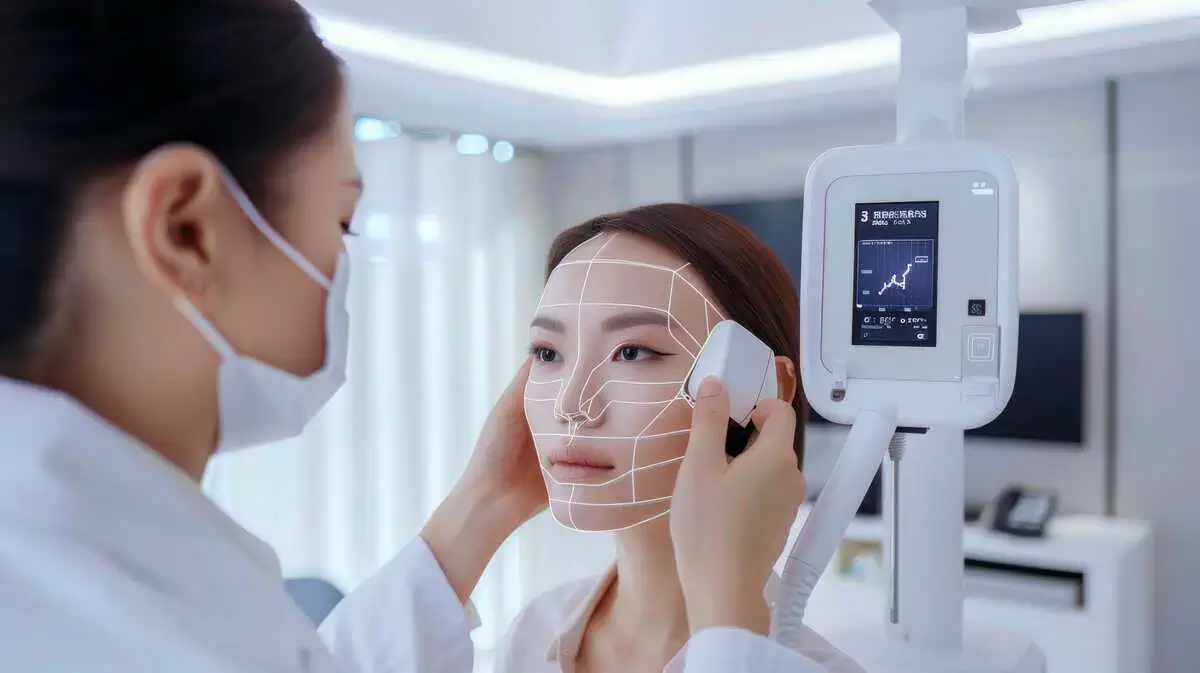


A 3D facial analysis reveals the measurable detail a mirror hides, including fine lines and deeper wrinkles, pore size, texture irregularity, redness, pigmentation, volume loss, and asymmetry across the full face and neck, captured as a model your provider can rotate, measure, and compare over time.
Most people land here after catching themselves in an unflattering photo and thinking something has shifted, but can’t name what. At Gig Harbor Aesthetics, the AURA 3D facial analysis in Gig Harbor, WA closes that gap by turning a vague impression into something you can look at directly.
AURA is a Swiss-engineered imaging system that captures a photorealistic, three-dimensional replica of your face and neck in a single scan. Multiple cameras fire together under calibrated lighting to build a model that maps facial structure, skin texture, and volume with sub-millimeter accuracy.
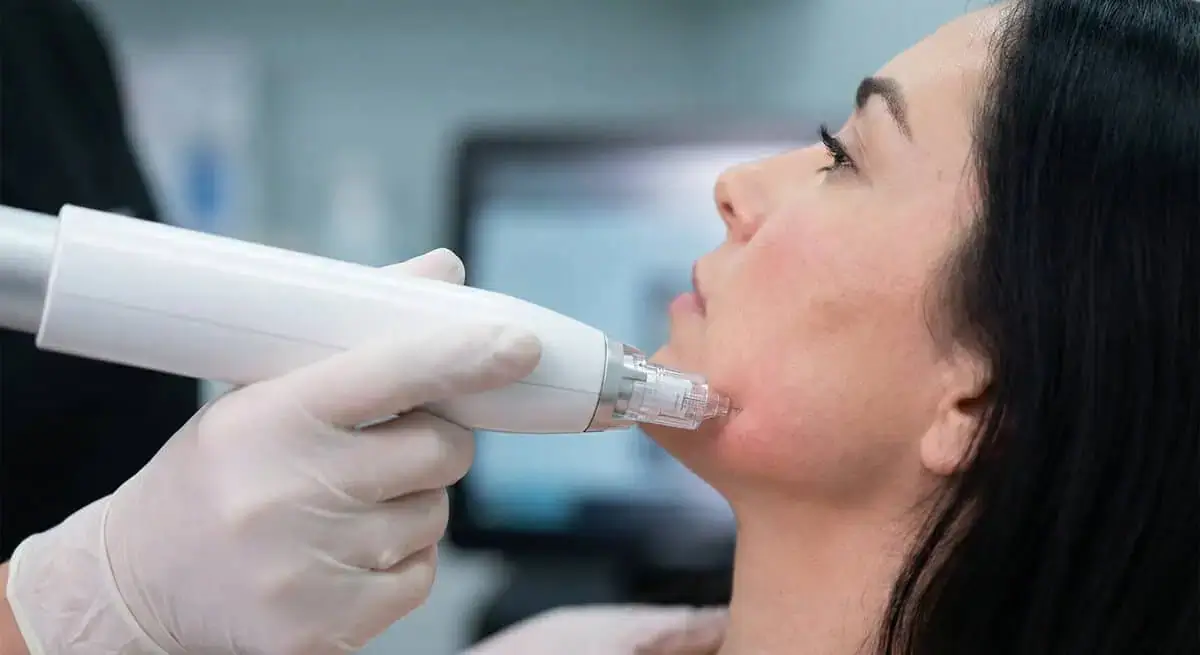
The capture itself is almost nothing to experience. Nothing touches your skin; there is no heat, no light pulse to brace for, and the exposure lasts a fraction of a second. Most patients complete it in a few minutes as part of a normal visit.
AURA is an assessment and planning tool performed by trained members of the Gig Harbor Aesthetics team, who walk you through what the imaging shows before anyone discusses a treatment plan.
Three kinds of information come out of a single scan:
The system measures fine lines, deeper wrinkles, pore size, and texture irregularity rather than estimating them by eye. The system records depth, location, and presence, so a line you have written off as minor can register as more established in the data, while something that bothers you daily can turn out to be shallow and surface-level.
A facial skin analysis also maps color, and the scan often surprises people. It clearly shows areas of redness, uneven tone, and pigmentation, including patterns of accumulated sun exposure that haven’t fully surfaced yet. Plenty of patients arrive focused on wrinkles and leave more interested in tone.
This is the category no flat photo can give you. AURA measures volume loss, asymmetry, facial angles, distances, and shifts in proportion over time, across the full face and neck. Coverage includes the temples, the area around the eyes, the cheeks and midface, the chin and jawline, and under the chin.
A standard photo changes every time you take one. Lighting shifts, the angle moves a few degrees, your expression relaxes, and suddenly you are comparing two pictures that were never comparable. That is why so many people cannot tell whether something has genuinely changed or whether the light was just kinder last spring.
Calibrated lighting and a measurable model remove most of that variability. Depth is the real difference, since volume loss and contour change simply do not read on a flat image, and those are the shifts people feel most and describe least well. During a skin analysis scan, you can rotate the model and see what your provider sees.
AURA documents and measures what is visible on the surface and in facial contour. It does not diagnose, and the interpretation belongs to your provider. If something on your skin looks medically concerning, a qualified clinician evaluates it directly.
The outcome simulations work the same way. AURA can generate illustrative visualizations of areas like the cheeks, jawline, and under-eye area, which help you visualize direction and discuss goals. They remain a conversation tool rather than a preview of your results. The imaging supports your consultation.
Your 3D facial analysis results are reviewed alongside your concerns, your history, and an in-person assessment. All three matter, and none of them stands alone.
What the scan really does is give both of you the same vocabulary. “I do not like how I look in photos lately” becomes a specific set of observations you can both point at on screen. From there, you sequence priorities, because what bothers a patient most and what the imaging flags most aren’t always the same, and you decide what comes first.
Texture and tone findings lead one direction, volume and contour findings another. Nothing gets recommended from a scan alone.
Your first scan becomes a reference point. Every scan after it compares against measured data instead of memory, and memory is unreliable when it comes to your face.
Slow change is the hardest kind to see, precisely because you look at yourself every day. A consistent baseline makes gradual progress visible, whether you are following a personalized skincare treatment plan or simply want to track how your skin holds up over the next few years. That record belongs to you as much as to your provider.
Does the scan hurt or take long? No. Nothing touches your skin, and the capture takes a fraction of a second within a few-minute appointment.
Does it replace talking with a provider? No. It gives the conversation better material.
Who is a reasonable candidate? Anyone curious about their skin, whether you have never had a treatment or want a baseline after years of them.
What happens to the images afterward? They are kept as part of your record so future scans have something to compare against.
So, the honest answer. A 3D facial analysis shows the measurable condition of your face, from line depth and pore size to tone, pigmentation, and volume changes that are too gradual to catch on your own. The scan decides nothing by itself. Its value is that you and your provider finally work from the same picture, and that you walk away with a baseline worth having even if you treat nothing this year.
If you have been working from impressions and bathroom lighting, one visit changes that. Our team offers skin analysis in Gig Harbor, WA, and will walk you through your results, answer your questions, and talk honestly about what fits. When you are ready, book an AURA 3D Facial Analysis, and we will show you what the imaging shows at our Gig Harbor practice.